Showing posts with label Marketing. Show all posts

Saturday, 30 November 2013

Move Over Facebook: Where Millennials Are Flocking to Next And How to Reach Them.

Move Over Facebook: Where Millennials Are Flocking to Next And How to Reach ThemAs someone interested in trends among the millennial generation, there was one particular statistic that caught my eye and continues to pop up on the radar: Only six percent of 12- to 17-year-olds who use the web want to be friends with a brand on Facebook, according to a Forrester 2011 report.
Circumstantially, this was supported by a millennial conference I attended when a panel of college students all raised their hands when asked if they were thinking about logging out of Facebook for good. While it wasn't a scientific study, the observation spoke volumes as to where Facebook may be heading.
And now, fairly recent research backs it up. With more than half of teens stating social media plays a role in purchases, Twitter has surpassed Facebook as the site deemed most important, according to a fall survey by investment-banking firm Piper Jaffray. The report also found Facebook's popularity is diminishing among this key demographic, with 23 percent of teenagers stating it is the most important social network site, down from 33 percent six months ago and 42 percent a year ago.
In the past Facebook has denied this trend is occurring, but in its third-quarter earnings call this month, the company finally acknowledged the fact the social network site is waning among youths.
"Our best analysis on youth engagement in the U.S. reveals that usage of Facebook among US teens overall was stable from Q2 to Q3, but we did see a decrease in daily users, specifically among younger teens," CFO David Ebersman said.
What's going on here? In addition to the obvious problem of having to accept friend requests from grandma and long lost relatives, privacy is a big concern. Facebook just cut a privacy setting that kept all user names out of the social network’s graph search. It also specifically targeted the teen demographic when it decided to allow 13- to 17-year-olds the ability to share photo, updates and comments with the public, not just friends. The result? Advertisers now have access to private user information they didn't have before, a move that may not bode well with teens.
So how should marketers respond to this rapidly changing social environment? Here are three tips for approaching millennials -- no matter what social platform they flock to in the coming years:
Listen rather than speak. "[Brands] might be better off being more reactive than proactive, and they should listen," according to the same Forrester report referenced earlier.
Indeed, the advantage that the proliferation of social platforms and social media monitoring tools now offer brands is an opportunity to easily keep their pulse on what consumers think and, possibly even more important, if there is anything going wrong. If you sell something, chances already are that someone, somewhere, is already talking about your product.
Act on those insights. By focusing on listening to those conversations already taking place, brands can provide better customer service, respond to problems before they escalate and easily identify areas for innovation. The simple act of tweeting information back or addressing customer service issues upon learning of problems can lead to big public relation wins for brands. Why? Millennials aren't necessarily expecting a brand to personally reach out to them to fix problems. In fact, it's even considered "cool" among millennial consumers when a brand takes the time to personally reach out.
Beyond being a nice gesture, why does this matter? We're talking bottom line impact if done right. According to a 2012 survey by American Express, social media users are willing to reward companies for top-notch service, spending 21 percent more with those that provide it. And thanks to the millennial consumers' larger presence on social networks companies that provide excellent customer service reap huge rewards when a happy millennial consumer shares one of these memorable moments with his or her friends and associates via Facebook or Twitter.
Seek out and engage your biggest brand advocates. If you're taking time to listen to what's being said out there about your brand, you'll not only be able to identify potential problems and opportunities to provide better customer service, but you'll also know who your biggest brand advocates are.
The benefit? These individuals are the ones who are already more likely to want to engage and help support your brand. It gets to that 80/20 rule: Twenty percent of the consumer base is typically responsible for 80 percent of the profits. Utilize the access those social media platforms provide by reaching out and engaging them. It could range from customer surveys you may be conducting to getting their feedback on marketing campaigns or even getting their input on new product development. As research has uncovered, millennials enjoy collaborating and knowing that they've made an impact on things, especially if it involves your next, new product offering.
Combining these tips together, brands will be poised to win no matter what social platform millennials choose to flock to next.

Friday, 29 November 2013

Facebook Is Making Life Easier for Social Media Managers

Facebook Is Making Life Easier for Social Media ManagersFacebook is making the lives of social media managers easier with two updates to its Page Composer announced today.
Previously, it took 12 steps to schedule posts. Facebook has now reduced that number to four, making it easier to schedule content without a third-party app such as HootSuite.
Photo uploads are also improving. Now, page administrators will be able to upload multiple images at a time, either from their desktop or by using a new drag-and-drop feature. While the scheduling changes are available today, the photo features are still forthcoming, but Facebook said they will debut soon.
These updates may give Facebook page managers a little extra incentive to post regularly. Last month, Facebook said its average referral traffic to media sites had increased 170 percent this year. The social network also reported that greater posting frequency leads to higher referral traffic -- as long as it doesn't cross the line into spam.

What You Need to Know About Pricing

What You Need to Know About Pricing StrategyIn Impact Pricing: Your Blueprint for Driving Profits from Entrepreneur Press, pricing expert Mark Stiving offers practical advice to business owners on how to price products and services. In this edited excerpt, he explains several important pricing concepts.
Price may not be the basis of your corporate strategy, but you must have a pricing strategy to implement your corporate strategy. Remember that pricing strategies are big-picture decisions that provide guidance to the people within your organization who actually set prices. They are your pricing processes and policies.
When you ask a marketer "What are some pricing strategies?" you will likely get the answer that there are three pricing strategies: neutral, penetration and skimming. Do a Google search on "pricing strategy," and you'll find the same answer over and over: neutral, penetration, and skimming. These certainly are pricing strategies, but they are not the only ones. A better way to look at this is that these are pricing strategies to define the general level of prices.


Neutral Pricing
Neutral pricing, the most common pricing strategy, means that you price so that your customers are relatively indifferent between your product and your competitor's product after all features and benefits, including price, are taken into account. Of course not all customers will be indifferent. Some will like your offering better, others will like your competitor's better. From this perspective, think of neutral pricing as maintaining the status quo. You aren't trying to gain or lose market share. Most pricing in relatively stable markets would be considered neutral. As you walk through a grocery store, the prices you see are neutral. Although you may use a combination of neutral, penetration, and skimming prices, you will most often use neutral.
Penetration Pricing
Penetration pricing means pricing more aggressively than neutral. It can be used to gain market share relative to your competition -- but be careful. This can and does start price wars. No company wants to lose market share, and if you lower your price in an effort to gain market share, your competitors are likely to lower their prices just to keep their share.
A more appropriate and common use of penetration pricing is to speed up the growth of a newly forming market. Low pricing is often justified to quickly grow a new market and to gain the largest share as the market grows. This strategy works best when you are the first entrant, or one of the first entrants, into a market. Penetration pricing in this situation may also deter other companies from competing when they recognize there are not huge profits to be gained.
Forward Pricing
Forward pricing is another term similar to penetration pricing, but with a focus on future costs. If you're building a product and it costs $1 to make, you probably don't want to sell it for less than $1. However, if you know that once you sell a million units, your costs will go down to $0.30, you may be willing to sell at a price lower than your current costs knowing that your costs will be lower in the future. The forward part of the name indicates you're looking forward in time to estimate what your costs will be and using that cost as your basis for pricing.
Skimming
Skimming is the opposite of penetration pricing. Companies skim in an effort to segment the market, to get the customers who are willing to pay more to do so. The two common implementations of skimming are at new product launch and at the end of a product's life.
When companies skim during new product launch, they are selling to customers with a high willingness to pay. Once this market is depleted (or at least slows down), the company lowers the price to sell to the next tier of customers.
A recent, famous example of this was the initial release of the Apple iPhone. Apple released the iPhone on Sept. 5, 2007, for $599. Apple fans rushed out to purchase the iPhone. Two months later Apple lowered the price to $399 to capture even more customers. The earliest adopters paid $200 more for the privilege of being first. In this case, though, Apple got a black eye. The huge price decrease was too much too soon according to the early adopters. Remember, these early adopters were big fans and Apple risked losing significant customer goodwill from these, their best customers. Apple eventually gave each of the early adopters a $100 store credit.
Skimming as a market entry strategy only works when you have a monopolistic position (the iPhone was unique). The lesson from Apple's case is to bring your price down slowly. The news articles at the time didn't berate Apple for lowering the price, they berated it for lowering the price too soon.
The other common use of skimming is at a product's end of life. Sometimes firms would like to discontinue a product but have too many customers who have a continuing need for it. In this situation, the company may gradually increase prices over market value to gain more revenue from these customers. The firm is trading off being able to compete for new business for additional revenue on existing business. One big caution is that customers, especially loyal customers like these, don't like to have their prices raised. You must have a good explanation and possibly an alternative offering.
It should be apparent that these three strategies follow specific corporate objectives. If a corporate objective is to raise ASP (average selling price), then skimming may be appropriate. If a corporate objective is to win market share, then penetration pricing is needed. If the corporate strategy is to generate and capture value, then neutral pricing would be appropriate.
Value-Based Pricing
Value-based pricing, another pricing strategy, is the most important. The idea seems simple. How much is your customer willing to pay? Set the price at or just below that point.
However, the implementation and usage of value-based pricing is much more complex.
Throughout business history, firms traditionally used the cost-plus method of determining prices. They determined how much their product cost to make and then added whatever margin they thought they deserved. Hence, the term cost-plus. Cost-plus pricing has some advantages: It's simple, you don't have to understand your customers, and it's easy for you and your competitors to get in sync. However, cost-plus is not optimal pricing.
You have to make a strategic pricing decision. Are you going to use cost-plus pricing or value-based pricing (or some other method)? If you want to increase profits, you will commit to using value-based pricing. As you learn more about value-based pricing, you'll learn that it's impossible to implement perfectly. After all, our customers never tell us exactly how much they're willing to pay. However, value-based pricing is accepted by pricing professionals and consultants as the optimal pricing strategy.

Sunday, 24 November 2013

For McRib Fans, Search for the Sandwich Is Worth the Effort

For McRib Fans, Search for the Sandwich Is Worth the EffortMcDonald’s will not offer the McRib nationally this year, giving those on the hunt for the polarizing sandwich a new set of challenges.
The fast-food chain, which has been busy with new food and beverage offerings, is allowing local franchise groups to decide whether to carry the seasonal sandwich. Markets including New York, Chicago and Dallas will have the McRib as a local option.
For many, finding a McRib will take more effort than in previous years. Fortunately, McRib fans are used to the struggle associated with finding their beloved pork sandwich.
“Prior to [the last three years], the McRib would pop up at random places during the year,” said Alan Klein, creator of the McRib Locator, a website and Android app that tracks where the sandwich is available. “I recall one March a friend sent me a picture of him eating a McRib on a Florida beach while I was freezing in snowpacked Minnesota with no McRib.”
The McRib, a boneless pork patty molded into a rib-like shape, slathered in BBQ sauce and topped with pickle and onion, made its debut in 1982. After three farewell tours in 2005, 2006 and 2007, the sandwich has only been made available for short time periods and in limited regions in the U.S. The last three years, McDonald’s has put McRib on the national menu for a period near the end of the year, usually in late autumn.
The limited access to the McRib has produced cult-like fans of the sandwich. Its popularity becomes clear when viewing Klein’s McRib Locator, which a McDonald’s representative now recommends as a tool for customers seeking the sandwich.
Klein created the McRib Locator in 2008 as a meteorologist exploring how to use Google Maps. The first time the McRib returned nationally, the site received over 90,000 views on a single day, overwhelming its hosting service. While recently the site has averaged around 2,000 views a day, the return of the McRib to franchises has caused a spike, hitting 7,000 views yesterday.
“For some, they like the sandwich as it bring something different to the menu that has not been replicated by other venues,” said Klein. “Of course, there is also the limited availability component where fans want to get their McRib before it is gone.”
This year, the McRib Locator has already charted around 1,500 sightings, with 300 confirmations (confirmed by users emailing Klein a photo of their receipt).
McDonald’s embraces the sandwich’s elusive appeal. “The McRib only comes once a year and you never know when. Tasting one is like catching a glimpse of a falling star. Or Bigfoot,” reads one McDonald’s 101 reasons to eat a McRib.
For McRib super-fans, comparing the sandwich to a falling star is hardly a stretch. “I nearly drove four hours last year to get one, however found there was one closer as I prepared to leave,” said Klein. “If the McRib were to return to a more sporadic availability I certainly could see myself taking a longer trip to find one.”
McDonald’s decision to put a hold on the national launch of the McRib stems from “a busy fall with new food and beverages,” according to McDonald’s representative Tyler Litchenberger. McDonald’s plans to launch new menu items, including Mighty Wings, Southwest Premium McWrap and White Chocolate and Peppermint Mocha, in November and December.

Why Spending on Big Data Isn't a Waste (Infographic)

Why Spending on Big Data Isn't a Waste (Infographic)The power of big data is enormous, but so is the stress of trying to tap it for all it's worth. We now produce data in staggering amounts, and marketers aren't always sure what to do with it or how to sift through the resulting mass of information.
Visual.ly, a self-described marketplace for visual content, has created an infographic with McKinsey that shows marketers can harness big data to increase the effectiveness of their campaigns and improve their companies' bottom lines. That's good news because, as the infographic reports, 72 percent of chief executives say marketers are rarely able to explain how much business the money they spend will generate.
Consumers today produce most of the data that marketers need. For example, 42 percent of European consumers conduct web searches on their mobile devices while shopping in brick-and-mortar stores. And 61 percent of consumers worldwide use digital tools as part of their "purchase journey" -- whether it be for research, comparison shopping, buying, reviewing or discussing their purchase on social media after the fact. A 10-year study of companies across multiple industries showed that harnessing this data led to a 5 percent increase in productivity and a 6 percent increase in profits.
But there's a long way to go. In a survey, chief marketing officers said 63 percent of projects do not use marketing analytics to inform decisions.
Check out the infographic below and stay ahead of the pack.Why Spending on Big Data Isn't a Waste (Infographic)

How to Make Your Mobile App Stand Out in the Ever-Expanding App Market

How to Make Your Mobile App Stand Out in the Ever-Expanding App MarketYou came up with a great idea, figured out your niche, hired developers and designers, and created your mobile app. However, the development and implementation are only half the battle. The next step is to market your mobile app correctly. Otherwise, it will get lost among all of the other apps available for users to download on their smartphones.
Every developer dreams of experiencing the same kind of success as apps like Angry Birds, Waze, Instagram, and Snapchat. A huge part of the success of those companies, besides their development, was their marketing strategy.
Here are 10 tips for how you can market your mobile app:

1. Be as Descriptive as Possible

How to Make Your Mobile App Stand Out in the Ever-Expanding App MarketLet’s start with the basics – the app’s description. A user should know, from thefirst sentence of the description, what your app does, and feel compelled to click the “more” button in order to keep reading.
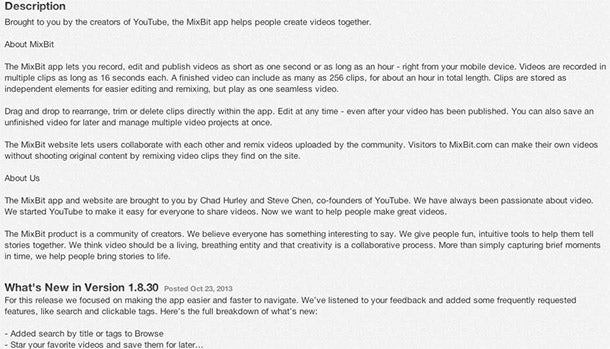
The first line of your description should be direct and showcase the power of your app. You don’t need to squeeze in everything, but you should make the reader want to click. If you have industry credentials or have produced a killer app before, mention that up top; for example, “Brought to you by the creators of YouTube, the MixBit app helps people create videos together.”
That line alone guarantees that users will click. It shows that MixBit is an app that will help users make videos, and that it is made by the people who already help them make videos. Don’t be afraid to toot your own horn, because it’ll add credibility and make users interested in your creation.
After users hit the “more” button, make sure to spell out the possibilities and go into as much detail as you can about your app. Use bullet points so that the information is organized and easy to read. Include free or extra features that users can take advantage of, as well as other devices that the app is available on.
Emphasize what makes it different from an older version of your app or from other apps, and give some background about your company. If your app has gotten positive feedback from big blogs or news outlets, mention what they said. If you need inspiration, look at the back cover of a popular book. You’ll see that it includes the book’s description, along with short reviews from reliable sources and industry experts.

2. Pick the Best Keywords

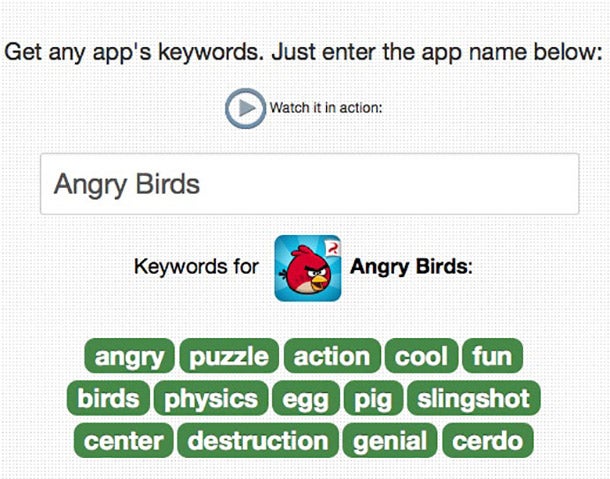
Keywords, like the description, will let users know exactly what your app is aboutand entice them to buy or download it. Brainstorm with your team and come up with all the keyword possibilities for it. Don’t put your company name or app namein your list of keywords since they already can be searched within a marketplace.
How to Make Your Mobile App Stand Out in the Ever-Expanding App MarketUse keywords that are less common (to decrease competition in search results) by searching for popular ones in the app stores. If your app can be used in more than one language, include keywords in those languages as well.
Need some help finding the best keywords? There are tools like SensorTower, AppCod.es, Google’s AdWords, and App Store Optimization by MobileDevHQ that will help you figure that out. Though you have to pay for a lot of these services, MobileDevHQ offers an “indie” plan for part-time developers with one app who want to do keyword research. However, you’ll have to pay at least $350 to find the competitive keywords.

3. Invest in Stellar Graphics

When it comes to technology and the Internet, people are mostly visual. They go to whatever stands out and catches their eye. Graphics, like the first line of your description, have to be compelling.
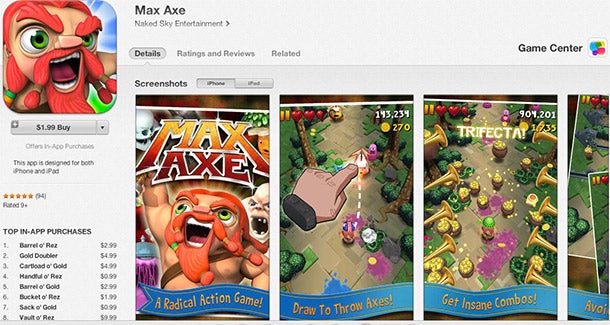
How to Make Your Mobile App Stand Out in the Ever-Expanding App MarketSince colors influence moods, make sure that the colors you use align with the mood you want your app to capture. It’s no accident that the angry birds are red.
Your graphics should be original and draw users in by being aesthetically appealing. If your app is high energy, put out a graphic that shows that. If it’s meant to be calming, use the color blue. Consult with graphic designers to discover the best mood and image that will capture your app’s purpose.

4. Capture Exciting and Descriptive Screenshots

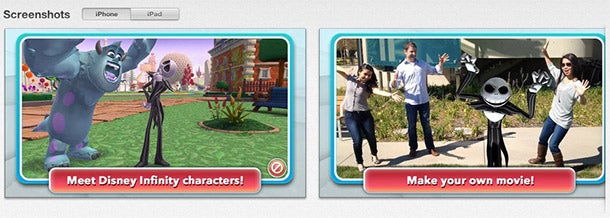
Include screenshots within the app description. Take shots from the most exciting and captivating parts of your app, and show just what the app does. Take up all of the available slots to showcase your screenshots, and don’t let any go to waste.
How to Make Your Mobile App Stand Out in the Ever-Expanding App MarketMake sure the shots are high quality, and type up captions and headlines that help to describe what users are seeing. Display them in the best order possible. If you’re showing how to go from point A to point B through your screenshots, it should make logical sense and appear in that order.
When you pitch to journalists and bloggers, send them the screenshots as well. Post the shots anywhere you can: on your website, Facebook page, Twitter background, and video demos.

5. Craft a Solid Pitch and Know Your Angle

When any company launches a new product or releases news, they have to know their angle. It’s what makes them unique and entices a reporter or blogger to cover them. The same thing applies for the announcement of a new app.
When emailing a member of the media, write a statement in the subject line that will be of value to the person on the receiving end. Communicate that your app offers a solution to the reader’s problem or satisfies the news outlet’s audience’s wants and needs. Don’t just say, “____ Launched a New App Today!” Make the subject interesting.
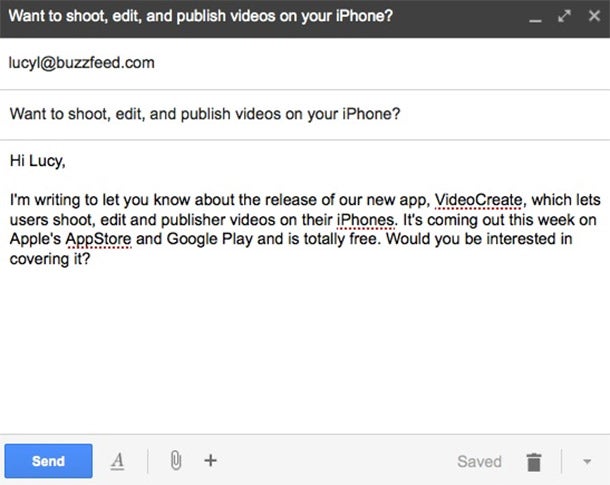
How to Make Your Mobile App Stand Out in the Ever-Expanding App MarketInside the actual email, keep the pitch short, and be sure that it relates to the publication or what the reporter has written in the past. Don’t just pitch to the general editor, who most likely receives dozens of pitches every day. See who covers launches of apps and, specifically, the ones in your category.
Make it as easy as possible on the reporter, and offer interviews with your developers and app creators. Put a link to any relevant information, as well as one to your website.

 6. Generate Buzz on the Right Media Outlets

After you come up with your pitch, reach out to the correct media outlets. If you want teenagers to use your app, pitch to the blogs they read. Contact editors and reporters at fitness magazines if your app helps people lose weight. Know who thekey influencers are in your app’s field, because they are who your audience will listen to and seek guidance and advice from.
If your app is for men ages 18-24, look at the games they play, topics they’re interested in, food they eat, and media they consume. Broaden your horizon and think about more than what your app actually does. Think “if this, then what?” If 18-24 year old men are going to play my app, will they also look at sports and fitness magazines? During a test run of your app, see who responds best to it and target that audience.

7. Advertise Where Your Audience Lives Online

How to Make Your Mobile App Stand Out in the Ever-Expanding App MarketAlong with knowing what your audience reads, you need to figure out where they hang out in the digital space. Take out ads on the websites they visit and interact with them on the sites they frequent. For example, you could pay for Facebook ads and identify the distinct audience you want to reach, or hold a Google Hangout with your app’s creators.
Create memes for different Reddit categories. Pay for spoken ads on podcasts. List yourself on an app discovery site like Appolicious. The possibilities are endless, but you have to pinpoint your exact demographic before making a move. Don’t just throw ideas out there or money for ads and see what sticks. Figure out who it is that you want to use your app before you make a move.

8. Engage on Social Media

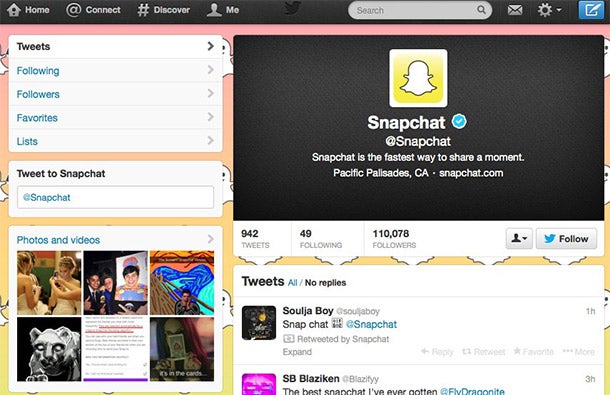
App users are Internet savvy. When you’re doing your demographics research, try to discover which social media sites your core audience goes on. Through Twitter, you should tweet at your app’s fans, give them promotions and discounts, teach them about the app’s different features, and announce any upcoming news.
How to Make Your Mobile App Stand Out in the Ever-Expanding App MarketOn Facebook, it’s critical that you use images, since the engagement rate for photos is 37% higher than that for text. If you’re on Pinterest, pin photos and videos of pertinent categories to your board. For example, if you launch a cooking app, pin photos of food, cookbooks, and videos that show baking demonstrations.
All of your accounts, if possible, should be customized and include a description of your app, company background, a website address, contact information, press, reviews, and any other relevant content

9. Create a Website with Great Content

Your app needs to exist outside of a store or marketplace. You have to make a website that is an extension of your app and shows what it’s about, how to use it, screenshots, and anything else you included in the store. Your website is where you can expand upon store or marketplace information and demonstrate even more features.
When people are looking for an app, they are going to turn to Google in addition to an app store. You want to make sure that you rank high for your category by putting great content on your site. Google Panda is now ranking pages with well-written content and credibility as opposed to just looking at SEO keywords.
How to Make Your Mobile App Stand Out in the Ever-Expanding App MarketPlace a blog on your site that contains content that pertains to your app’s users. Update the blog as frequently as possible, and hire the best writer you have on your team to run it. Whenever you post, tweet it out, add a link on Facebook, and email it to your list of subscribers. Otherwise, it’ll fall on deaf ears.
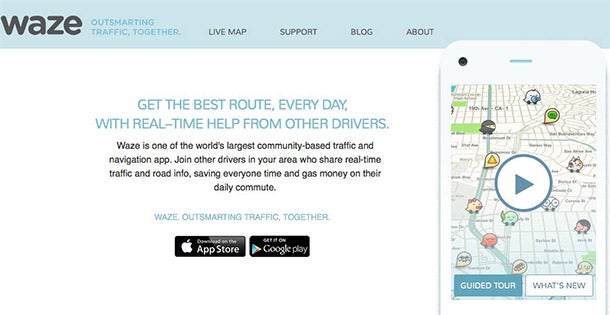
Waze is an example of an app with an excellent website. Like the app, it’s simple to navigate and minimalist. There are blog posts about company news, meetups, and crowdsourcing, as well as some on new features that help users find cheaper gas prices.

10. Make a How-to Video

Due to the visual nature of the Internet, it’s important that you create a video for YouTube that shows off your app. If people are paying even 99 cents for your app, they may want to watch a how-to or demonstration video before purchasing.
In the video, illustrate what your app does with live action shots and screenshots. Since YouTube is the second largest search engine, you want to make sure your app has some clout there. It’ll increase your Google ranking if people are clicking on the video and engaging with it.
How to Make Your Mobile App Stand Out in the Ever-Expanding App MarketAs an added bonus, you can direct that traffic to your website. Fill out the description and keywords, upload your company’s logo as your icon, and make a customized page. All of those steps will help with branding.
The video should be short and sweet – about three minutes or less – since users typically have a short attention span. Put a call to action at the end for users to download the app in the different marketplaces and go to your website.
Send the video to bloggers and key influencers, post it on your other social media sites, and place it in the blog/about section of your website.

BONUS TIP: Ask for Reviews

After the app is released, ask for feedback from members of the media and your users. Reviews will push you to the top of Google ranking and increase the chatter about your app online.
On the app store or marketplace, provide a support email address where customers can ask you questions or address certain issues. Add a “more” section to your app that encourages people to leave reviews and express their opinions.
How to Make Your Mobile App Stand Out in the Ever-Expanding App MarketTry programs like Apptentive and Appboy, which let you see data about your reviews, or AskingPoint, which will enable you to send feedback polls and questions to a specific group of your app’s users.
Within the app, you also should ask for a positive review about 10 days or so after a user has downloaded it. Persuade them, if they like the app, to give you feedback, but also give them an option to stop the notification from popping up. The worst thing you can do is get on your user’s nerves or be too pushy.
When people do give you feedback, listen and reply to them. Engage in conversation and figure out how to solve your app’s issues. Customer service is key and will only help your marketing strategy.By implementing these 10 tips, you’ll be able to stand out in a saturated app market and reach your core demographic of users.

Saturday, 23 November 2013

Startups Eschew the Made in America Label

Startups Eschew the Made in America LabelFrom Martha Stewart's American Made event to Entrepreneur magazine's recent spread on the theme, the obsession with the Made in America label has reached a fever pitch. But what do you do when your product idea can't be made in the U.S.?
That's the question Simon Ford and Malte Barnekow found themselves pondering in 2009, when they were canvassing different locales to house their spirits brand, The 86 Company. "We actually looked to distillers and suppliers in several countries to partner with on making an old school Carta Blanca rum, like the ones that came from Cuba during Prohibition, There were distillers that make excellent rum and were willing to work with us, but didn't have the knowledge and capabilities for the style we wanted to create."
And while the two New York City-based founders considered facilities in the U.S., which accounts for most of the company's sales, they noted a lack of manufacturing capabilities as a core reason why America was out. "Local manufacturing in the U.S. is simply not competitive," says Barnekow. "In my experience, it's twice the price for half the quality, across the board."
In recent years, the U.S. has certainly seen a resurgence in manufacturing, with companies like American Giant and Black & Denim making a commitment to produce products stateside. And various marketplaces and services such as Etsy and Maker's Row have sprouted to support them

Still, some startup founders, who would normally choose to set up shop or source ingredients in the U.S., are either finding the process prohibitively expensive or impossible due to a lack of resources.
Runa is a Brooklyn-based beverage company (with a nonprofit branch) that makes tea and an energy drinks. Yet the main ingredient for the company's tea is called guayusa, a leaf from trees that grow in the Amazon. To harvest the leaf, which required making connections with farmers in Ecuador, was a challenge in itself. "We had to figure out if and how [Ecuadorian] communities wanted to work with us, and we had to get a product regulated and accepted in the U.S. that hadn’t been sold there before," says Dan MacCombie, Runa's co-founder.
Startups Eschew the Made in America LabelMacCombie and Runa co-founder Tyler Gage spent the first six months of the company's life traveling around South America, scouting out places to source their guayusa. The trek also required "convincing people we were legit, had good intentions and we weren’t a bunch of North Americans coming to screw them out of their money and their land, which unfortunately, is something they’ve experienced in the past," adds MacCombie.
Despite its benefits, having a global operation, comes with many headaches. Just ask Jamal Motlagh of Acustom, a New York-based custom clothing company that uses digital technologies to create bespoke menswear.

"Legal issues such as tariffs and import duties have been problematic," says Motlagh, whose company uses fabric sourced everywhere from North Carolina to Turkey but operates mainly out of a factory in China. "Import has been the biggest issue into China. The problem there is that you need a ground logistics team that you can trust. Fabric production and supply is still an old-school game. There aren’t good websites or ways to get a hold of them or their offices globally."
The 86 Company's Barnekow adds that working with distillers from around the world comes with its own set of challenges. "Our caps are from England, our bottles from China, our liquids from Canada, England, Mexico and Panama," he says. "So, yes, we deal with the tedium of time differences, currency fluctuations, regulation, complex tax constructs and a shipping industry that has very little time for small entrepreneurs like ourselves. It makes for a very nice story from a marketing and product perspective, but it does make our day-today lives extremely difficult."
To minimize this difficulty here are three tips that have helped these founders make their international operations work:
Right size your expectations.
"In my experience, a general rule is work with suppliers that are the same size as you," says Barnekow. "Large suppliers are designed to serve large customers. If you are a small company, look for small suppliers. You will speak the same language and have an understanding for each other’s incentives."

Focus on the positive.
"The moment where we think everything would be easier [if we were based] in the U.S. happens every day, but it wouldn’t make me want to run this company," says MacCombie from Runa. "We connect the farmers to the land to the supply chain to the market… I know people starting tea companies now -- good people, more power to them -- but I don’t feel that’s what I want to contribute to the world. The complexity of working with farmers, supporting ecosystems -- that’s what keeps it interesting. I spend more of my time selling tea, but it’s always in the back of my head that I’m doing something that really aligns directly with what I believe in."
Make the most of your situation.
Working directly with the people in the factories as well as the sourcing companies has been very interesting, and I use the time difference to my advantage," says Jamal from Acustom. "I send questions during my work day and later in the night, I’ll get an answer back… So when I wake up, they’ve had a full day to work on whatever the question or problem was."

Tips for Investing in Emerging Markets (Infographic)

Emerging markets worldwide are increasingly drawing companies and individuals looking for new areas to invest. According to the International Monetary Fund, emerging markets can expect two to three times as much growth as develop economies in the coming years.
For companies, growth means profit, with half of companies saying at least 30 percent of global revenues will come from emerging markets by 2017. Top countries to watch include Russia, China, India and Brazil.
Check out the infographic by Timothy Sykes below on tips and trends you need to know before investing in emerging markets.
 Tips for Investing in Emerging Markets (Infographic)

Friday, 22 November 2013

The Secret to Selling Your Brand With One Sentence


The Secret to Selling Your Brand With One SentenceYou believe in the importance of your vision, but how do you get others to stop and listen to you? There will be many instances when you don’t have a lot of time to grab someone’s attention, be it a potential investor or a licensee. That’s why you need to be able to summarize the benefit of your business idea in a single, powerful sentence -- a sentence that is so direct and compelling, it stops whoever reads or hears it dead in their tracks. A good one-line benefit statement should make someone think: "I want to know more about that."
I’ve learned that if I craft just the right sentence, it’s all I need to get people to listen to my pitch, open my emails and answer my calls. I still remember the day the iPod launched and Steve Jobs called it “a thousand songs in your pocket.” Wow. That's captivating. He didn’t have to explain any further. We wanted it already! 
People don’t care about how something works.They want to know what it’s going to do for them.
Newspapers, tabloids, and these days, Twitter have been making use of the headline for years. How often do you find yourself on a webpage you never intended to visit, all because a headline was so tempting, you had to click on it? That should give you an idea of what I’m talking about. Creating excellent one-line benefit statements isn’t an easy skill, but it’s an important one, because it can be used to explain your idea in so many different kinds of situations in an attractive, successful way.
Sometimes, you only get one chance to make an impression. Cut through the clutter to make it count! Here three ways to create an awesome one-line benefit statement:
1. Make it emotional.
Why should people care about what you have to say? Grab them with something they can relate to. Benefits sell ideas, not facts. What is your idea going to do for the consumer or the world? Don’t be afraid to use emotion. People are motivated by their emotions more often than they are motivated by reason. Emotion also evokes visual imagery -- if people can begin to see your idea, that’s a good thing. Some emotional words include: "free", "incredible" and "unbelievable."
2. Keep it short.
Like -- really short. I’m talking no more than 10 to 12 words, ideally less. Remember, you don’t have much time. If your statement is too long, people may move on before they’ve even finished reading or hearing it. Don’t be intimidated by using fewer words. This is a really good exercise in general. Too often, I ask an inventor or entrepreneur to tell me about his or her idea and I’m overwhelmed with a five-minute speech. "What is he talking about again?" I find myself thinking. I’m not even sure. Brevity forces clarity.
3. Use numbers.
Numbers convey specificity. Look around you. Headlines with numbers dominate our world. One has only to look at Buzzfeed to understand the power of numbers.
Here are some examples of one-line benefit statements my students and I have used with great success in the past:
  • “The most versatile organization system available.”
  • “The store all, carry all, go anywhere elevated pet feeder.”
  • “This label will increase space on your packaging by 75 percent.”
Try out potential statements on everyone you know. Which one has the greatest impact? Ask for feedback. Then, start using this line all over the place. When someone asks: “So what is it you’re working on again?” you will have a great answer!

Thursday, 21 November 2013

5 Lessons About Blogging You Can Learn From BuzzFeed

5 Lessons About Blogging You Can Learn From BuzzFeedPlenty of media professionals like to get down on BuzzFeed for providing what they see as "lowest common denominator" types of content. And with post titles like, "'Men in Black' is the Only Movie That Truly Understands Your Hangover Right Now," I don't think anybody's arguing that the site's a frontrunner for any major journalistic integrity awards.

But the site receives an average of 40 million unique visitors a month. Yes, that many. That should be enough to make all website owners stand up and take notice. Something in the site's formula is resonating with online visitors across nearly all demographics.

What kind of lessons about blogging can you derive from this "listicle" driven media powerhouse? Here are five:

1. List posts work.

The way traditional journalists talk, you'd think that the list post, or listicle, is a sign of an impending downfall of civilization. And while list posts tend to provide less substance than fully fleshed-out editorials, this doesn't always matter.

People love to read list posts because their inherent structure telegraphs to readers that they'll be able to consume larger amounts of information with less effort. Because list post authors have already organized the key points of information for their readers, website visitors find this type of post less intimidating and more easily accessible than other content formats.

I'm not saying that every post on your site should follow the list structure, but it's certainly a valuable tool that deserves a place in your blogging arsenal.

2. A GIF is worth a thousand words.

BuzzFeed makes liberal use of pictures and animated GIFs in their posts. Not only does this help to create a subconscious feeling of a shared experience among readers, it also minimizes the amount of time that must be spent writing blog post content. Just take a look at the text in the "Men in Black" article linked to above to see this principle in action.

If you're in a highly-technical field, it probably doesn't make sense to crank out blog posts that are nothing but lists of animated GIFs. But even the most advanced business blogs need to keep in mind that the human eye is drawn more readily to pictures than to text.

Don't be afraid of using pictures and animated GIFs, but do use these tools in a way that's appropriate for your readers.

3. Make regular posting a priority.

Given the post structures and surface-level knowledge that BuzzFeed employs, not to mention its sizable staff, the company is able to post dozens of individual articles a day. And because visitors know that there's always going to be something new on the site, they stop back again and again to read the new content.

Posting at this rate is unrealistic for most business blogs. But even if you're only posting one to two times per week, keep things consistent. Let your readers know when you'll be publishing new content so that they know when to come back and revisit your site.

Related: How to Get More Comments on Your Blog

4. Know your audience.

BuzzFeed relies heavily on pop culture references and popular media topics (again, see the "Men in Black" article referenced above), as the numbers show that these posts get the most traction among the site's readers. That doesn't mean that the site doesn't cover "heavier" topics from time to time. Recent articles on Obamacare, marriage equality and stop-and-frisk policies all appear on the site's homepage, though the bulk of the site's real estate is devoted to more throw-away articles.

What kinds of posts do your blog readers demonstrate the most interest in? Your Google Analytics account and your social profiles can give you some insight into their preferences. But it's up to you to identify these trends and then mirror them back to readers in your content strategy.

5. Keep banner ads to a minimum.

One of the most interesting things about BuzzFeed's success is that you won't see a banner ad in sight. Sure, the site runs some promoted posts and sponsored contests, but according to founder Jonah Peretti in a 2012 email: "We care about the experience of people who read BuzzFeed and we don't try to trick them for short term gain. This approach is surprisingly rare."

You won't find banner ads on BuzzFeed because they know that these images disrupt the user experience and turn off readers. And if a site that's built around pop culture puff pieces can find a way to make money effectively without resorting to these distracting ads, chances are your company can as well

The Psychology of Discounts and Deals (Motiongraphic)

Everybody loves a bargain -- it’s business, but it’s also psychological.

The human ability to count is hardwired into several parts of our brains, according to this motiongraphic from eBay Deals. Even before we are able to count, infants develop expectations for what should be the result of an addition or subtraction equation. When the brain perceives larger quantities, then the specific numbers fade away and infants only understand the proportion between two numbers.

And so it is with customers and their knee jerk reaction to getting a deal. Customers will be further incentivized by larger-percentage discounts.

Learn more about the psychology of discounts in the motiongraphic below.

Why Too Many Startups Run Out of Money Too Fast


Why Too Many Startups Run Out of Money Too FastOver the last five years, my firm Red Rocket Ventures has consulted or mentored more than 500 startups -- nearly all of them suffering from the same problem. They are typically so focused on building their product, they don't raise enough capital to cover essential sales and marketing activities that will allow them to better attract additional venture capital down the road. As a result, many startups run out of money soon after launch, stalling out before they reasonably had a fighting chance.

The root of the problem really comes down to better education. Entrepreneurs need to learn early on that you can't launch a startup unless you have raised enough capital for both your product development and your initial sales and marketing activities. They must learn the essentials that all investors look for: rapid user growth, proven customer acquisition metrics from previously tested sales and marketing channels and knowing the best, most cost-effective sales and marketing tactics to stretch their limited budgets.

By focusing on this education problem, I was originally thinking about building a startup curriculum in a university-style setting. But, given how quickly technologies and marketing tactics are evolving, I was worried about having the curriculum go stale the minute it was finished. Then, I thought some of this could be taught through startup incubator or accelerator programs, but that was only available to the small percentage of applicants that get accepted and only for the short period of time they were in the program.

I wanted a solution that would appeal to all companies that had the interest and the resources; a program that would grow with them through all stages of their growth -- from freshman year through senior year, using the education analogy.

I realized it was the agencies who had their finger on the pulse of all the rapid changes in technologies and digital marketing tactics. But, not the large agencies that are jacks-of-all-trades and masters of none. The boutique, niche agencies are the deep domain experts in their particular field, for example, search engines or social media.

And, more importantly, these boutique agencies that are smaller in size are also entrepreneurial and have first-hand knowledge of how to stretch startup marketing pennies into revenue dollars. By rolling up these services into a one-stop shop, managed by one person from the team, the startup “excubator” model was born in Chicago with the launch of Ensemble in August 2013, of which Red Rocket is a member company.

But, to really appeal to the startup community, we understood we needed a more attractive pricing plan that was more affordable to startups -- one where 20 to 40 percent discounts would apply for bundling your services needs into one “digital services suite” of expert vendors. In this model, the excubator would also consider taking an equity position in these businesses, so it actually had a vested interest to help these businesses succeed, as partners with entrepreneurs over the long term. This evolves the excubator members’ revenue models from the normal “short term fee driven” model to a more logical “long term venture capital return” model, which if done correctly, should improve the a typical startup’s odds of success from 10 percent to closer to 30 percent in the process.

It is too early to tell if this excubator model will work or not. A current flaw in the model is it still requires the startups to go cash out-of-pocket, even with deeply discounted rates, which they may or may not have the money to pay for. In a perfect world, an excubator model would have raised its own venture fund, or would partner with existing seed-stage venture funds, to help fund these early stage entrepreneurs who may have a great idea, but not the capital to afford the collective services which are required to launch the startup with maximum odds for success.

If excubators have done anything, they have creatively brainstormed how to help more startups over the long run.

5 Simple Ways to Get Your Customers to Listen to You


5 Simple Ways to Get Your Customers to Listen to YouIf you're in business, chances are you're trying to get someone –customer or prospective client – to do something, whether it's call you, visit your website, or try your product. But in a crowded marketplace, how do you distinguish yourself from the competition?


Enter Tom Haley, Group Creative Director at Chicago-based Jellyvision Lab, an interactive conversation company specializing in providing personalized multimedia content on behalf of its clients. We spoke with him about how businesses can better educate and communicate with their customers. Here are his five tips:

1. Cut out what's not important.

It's important to make every sentence as clear and efficient as possible, Haley says. "If you can omit a word, a sentence or a paragraph that's not key to helping someone understand something, do it," Haley says. For example, if you sell lawnmowers and you're trying to explain why your lawnmower is better than the other lawnmowers on the market, the customer probably doesn't want to hear about the company's history.

"Don't presume the audience has any interest in what your message is," Haley says. Business owners are consumed with their business, but forget that for customers, their interaction with you is just a small part of their day. They want help, not necessarily the history of the product, Haley says.

2. Explain things before you name things.

If you work in a field with special terminology or jargon, be sure to explain the term and concept before using it over and over because people may not know what they mean. For example, if you own an insurance company, customers have heard of copays and deductibles, but may not know the difference between the two or what they mean. By explaining that a deductible is money that a customer pays before the insurance policy kicks in, you ensure everyone's on the same page.

3. When possible, use metaphors.

Haley says using metaphors can help explain complicated concepts to consumers. For example, if you're selling a complicated suite of business software tools, you could compare the solution to a busy restaurant, where the head chef efficiently directs her staff while keeping diners happy.

4. Be funny.

"Humor is at the core of what we do," Haley says. Jellyvision has found that people learn more and have a better experience if you can make them laugh. "It's not about jokes or gags," Haley says. "It's more about being human, approachable and personable." No matter what you're doing, always remember you're just talking to a single human being, Haley says.

5. Tell the story in chronological order.

In storytelling, it's easy to get the order of events wrong, Haley says. Therefore, it's important to use real-life context when you're trying to explain something to consumers. For example, Jellyvision created an interactive conversation experience for a utility company to educate its customers about how to read their energy bills. Instead of reading line item charges and trying to guess what they mean, you can start by saying something like, "Energy is generated in power plants, which is delivered to your home, but that process costs money, which appears on your bill as an energy charge."

Tuesday, 19 November 2013

Marketers: The 3 Differences Between Millennial Guys and Gals


Marketers: The 3 Differences Between Millennial Guys and Gals
For anyone looking to get a handle on what makes the influential millennial consumer tick, don't forget this simple truth: not all millennials are alike, and this is especially true when it comes to the sexes.
Like all populations, millennials can be segmented into unique and specific subgroups, and you'll want to add gender to the top of your list when approaching your segmentation strategy. Because when it comes to the sexes, there are some key differences in their lifestyle and purchase behaviors.
What are these differences? First, some stats. According to the Bureau of Labor Statistics, women are quickly climbing the ranks, earning 60 percent of master’s degrees, about half of all law and medical degrees, and 42 percent of MBAs. In the workplace, women have also made strides, now holding over half of managerial and professional jobs—up from 26 percent in 1980. And in the professional fields, close to one-third of America’s physicians are now women, as are 45 percent of associates in law firms.


Despite these advances, women continue to face barriers with pay equity being a key concern. Fifty years after the Equal Pay Act, women are still paid an average of 77 cents for every dollar paid to men. But take heed: according to a 2012 Pew Research Center study, 40 percent of American working wives now already out-earn their husbands, and according to one blog on the subject, referencing a Boston Consulting Group study that predicts, in 15 years, women will not only close the income gap with men but out-earn them.
Given this assertion and assuming things relatively equal in terms of buying power between millennial guys and gals, here are three key differences:
1. Millennial males are more likely to be early adopters
From the research, millennials, across the gender divide, are 2.5 more likely as non-millennials to be early adopters. But when parsing the differences between the sexes, millennial men express a heightened interest in being the first to try the hottest new technologies available.
This finding holds true when considering their shopping habits. Indeed, eMarketer recently highlighted a 2013 DDB Worldwide survey of US Internet users that underscores the increasing influence of male shoppers between the ages of 18 and 34. Not only did 40 percent of male millennial respondents say they would buy everything online if they could versus 33 percent of female respondents, but male millennial consumers are more likely to shop online auction sites, more likely to use a mobile shopping application and request a price match via their smartphone and are more likely to use a retail store app than female consumers.
The bottom line? Given their early adoptive nature, the male millennial consumer is an increasingly interesting target for digital marketers these days. Case in point: The Dollar Shave Club, an online razor subscription service, became a household name and go-to brand for men thanks to a viral video and a bevy of amused millennial males who couldn't wait to share the hilarious video with their friends

2. Men are "lone rangers"
In general, millennials are highly social, both off and online, and are significantly more likely to do things in groups, like traveling together, than non-millennials, research shows.
But, again, when parsing the differences, the research shows that you're more likely to find millennial men enjoying a "lone ranger" lifestyle from eating to shopping to traveling alone. On the other hand, women like to do things with their gal pals and families in greater numbers, according to one study.
To reach them effectively, create custom experiences that appeal to these consumption behaviors. For instance, in the case of male travelers, focus on providing efficiencies like quick check-ins and outs via kiosks where human interaction could be viewed more as a nuisance when a long wait time is involved. When targeting women, consider offering group travel discounts or "girls night out" exclusive brand experiences for the ladies to win their loyalty.
3. Moms are taking charge
With this final point, it's not that moms matter more than dads. However, according to the research, millennial moms are finding themselves in the position of being the key decision makers on big decisions, as opposed to the past, when men were the heads of the household. Today, moms are "calling the shots" when a situation involves major household purchase decisions.
Indeed, a Pew Research Center survey found that the woman makes decisions in more areas than the man in 43 percent of all couples. Men make more of the decisions in only 26 percent of all couples, while couples that split the decision-making responsibilities comprise the remaining 31 percent.
"Mothers are now directly influencing the for a family unit," says Christine Barton, as quoted in Marketing to Millennials (AMACOM 2013). "Not surprisingly, there is a lot of consumption of mom opinions thanks to an overwhelming number of mothers, especially first-time moms, turning to social media for product research and advice. There is a tremendous amount of power in mom advocacy as a unit."
These moms are indeed influential, with 50 percent of them making a brand or product recommendation either daily or weekly, and 21 percent talking to their friends and family members about products at least once per month. So when targeting millennial parents with a new or existing product offering, step into the shoes of these savvy moms and think about how you can cater directly to their needs.
Given these differences, it makes sense to think of millennial men and women as two different groups. Spend time getting to know your target consumers and the differences, whether by segment or by gender. It will lead to a bigger payoff in the end.